A Nigerian infrastructure-finance institution (via DREEF) · 2026
LMS 2.0: a learning platform with a module-scoped AI tutor
An internal learning platform for a dense body of infrastructure project-finance knowledge: phased curricula, reference material kept inside the module, a manager view, and an AI assistant deliberately scoped to the module you are in rather than the open web. Shares a design system with the CRM.
- Role
- Product Designer
- Platform
- Web application
- Timeline
- 2026
- Team
- DREEF design team; shared design system
- Learner & admin experience design
- AI assistant interaction design
- Design-system contribution
Client name withheld. Screens are anonymised and all data shown is fictional.
Context
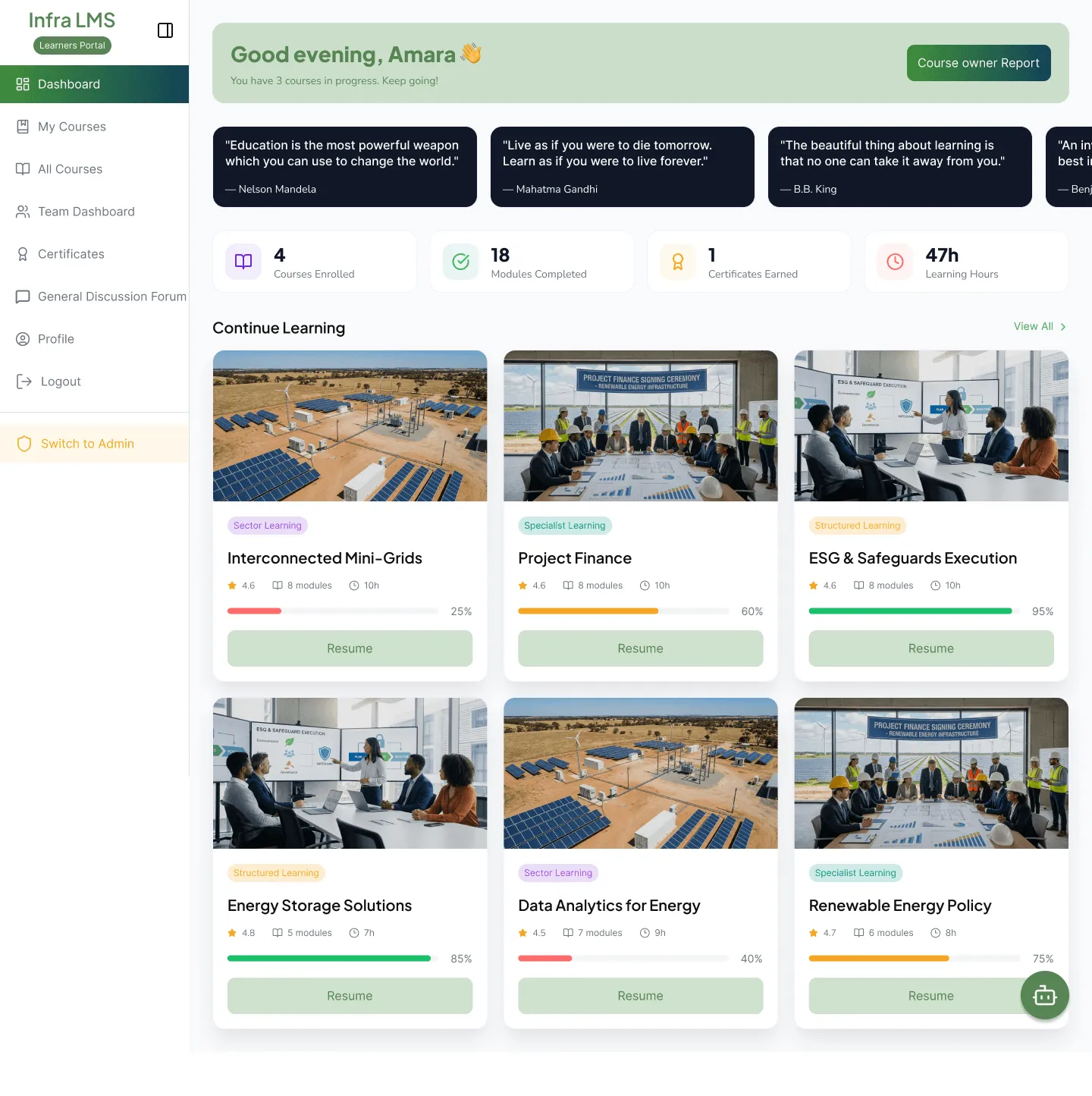
This institution runs on a specialised body of knowledge: infrastructure and distributed-renewable-energy project finance, ESG safeguards, credit structuring. New staff and partners have to learn it, and it mostly lived in people’s heads and scattered documents. LMS 2.0 makes it teachable, trackable, and answerable in context. It shares a design system with the CRM.
The problem
- Onboarding into complex project-finance workflows was slow and informal.
- Reference material (SOPs, glossary, FAQs) lived somewhere else, so learners kept leaving the lesson to find it and losing their place.
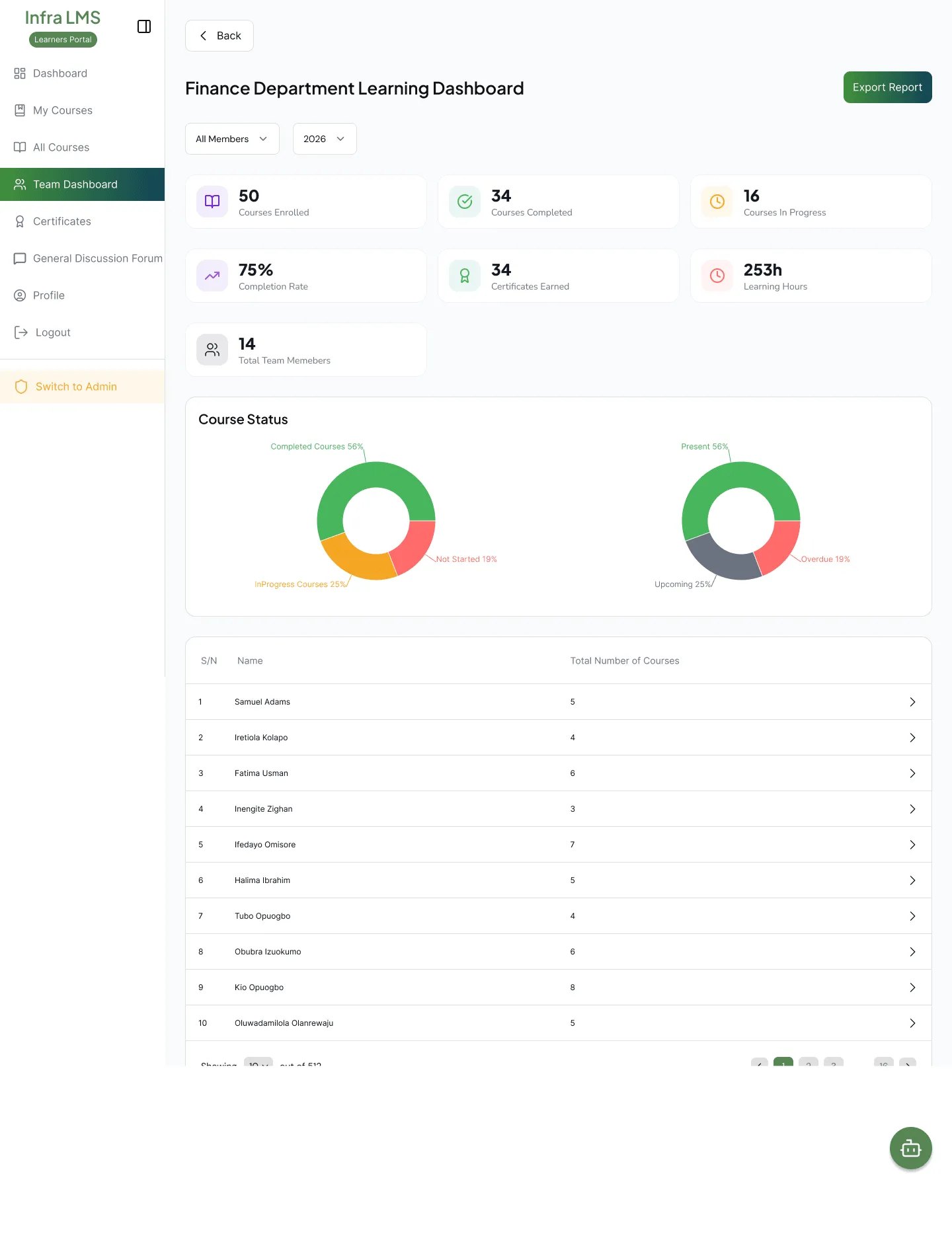
- Managers had no view of who had learned what.
- Course owners got no structured feedback they could act on.
What I did
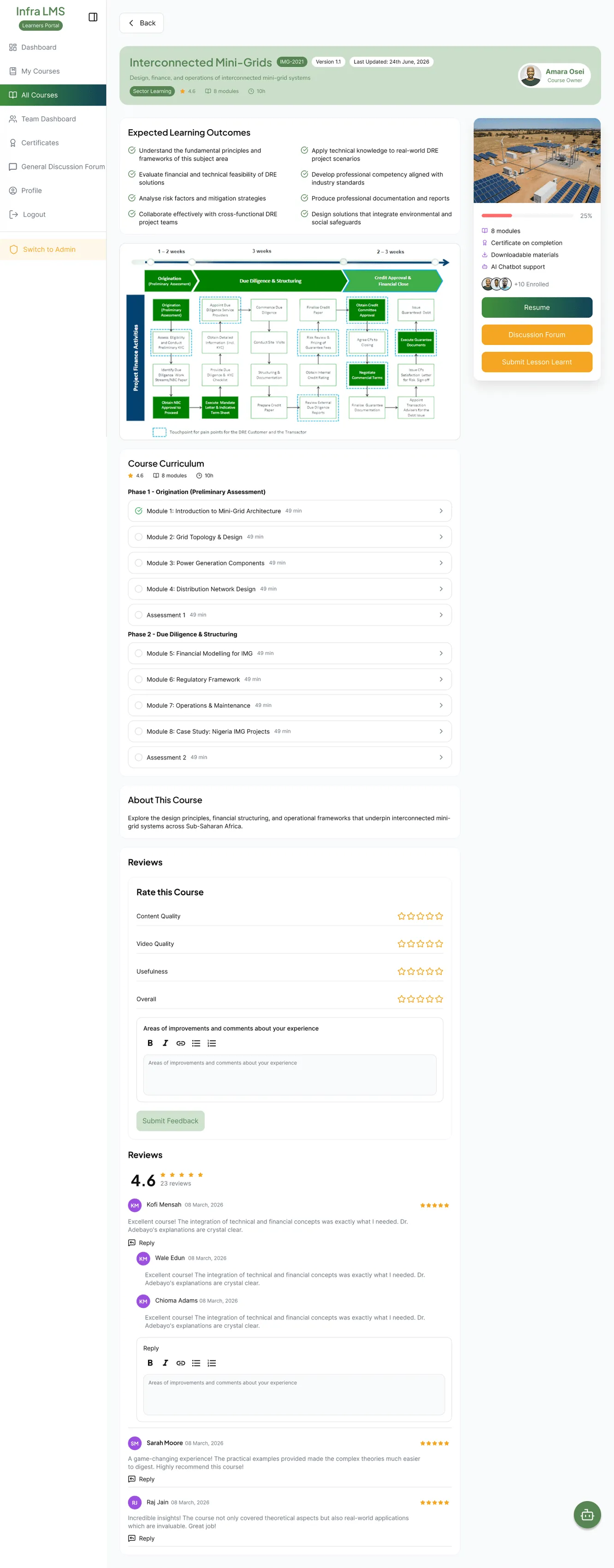
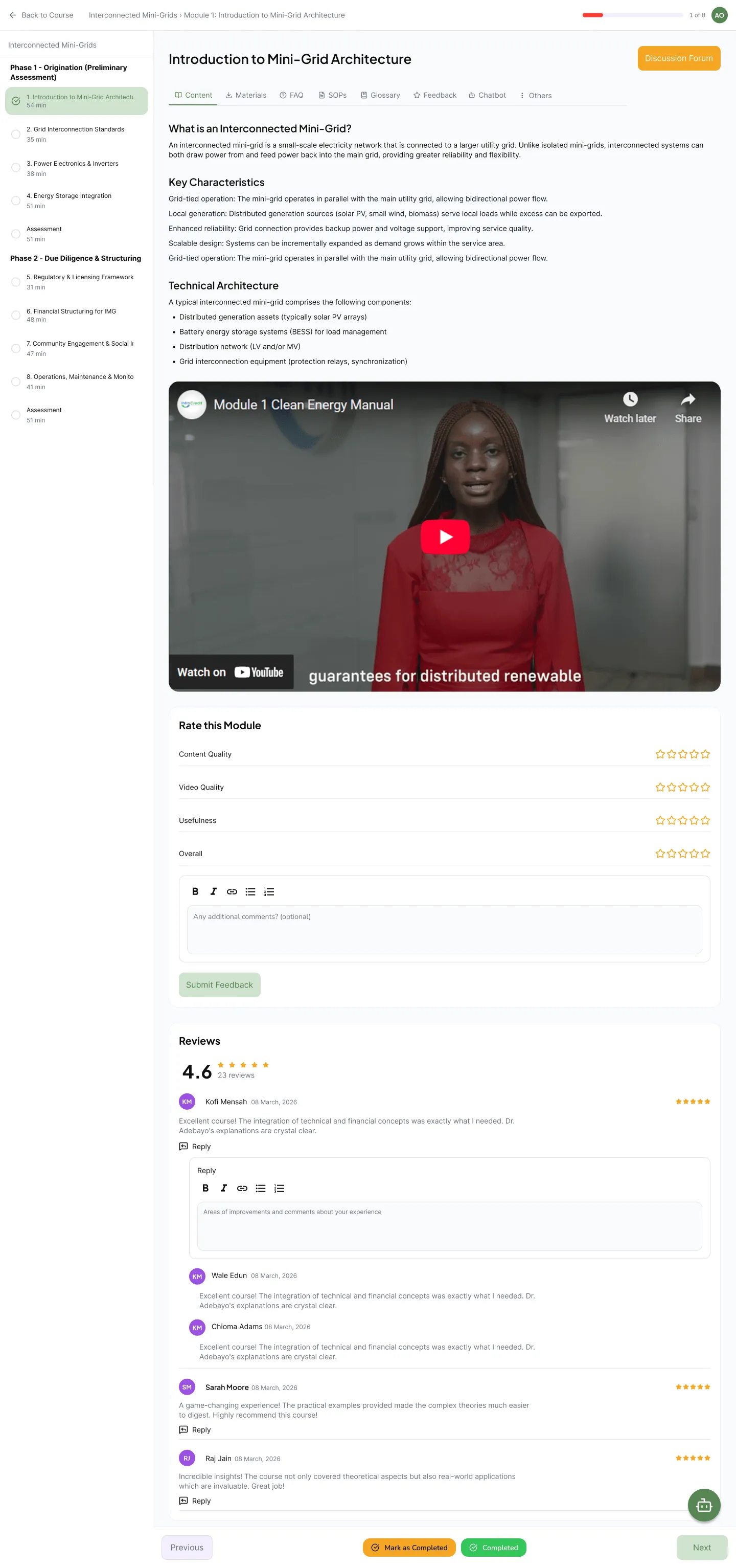
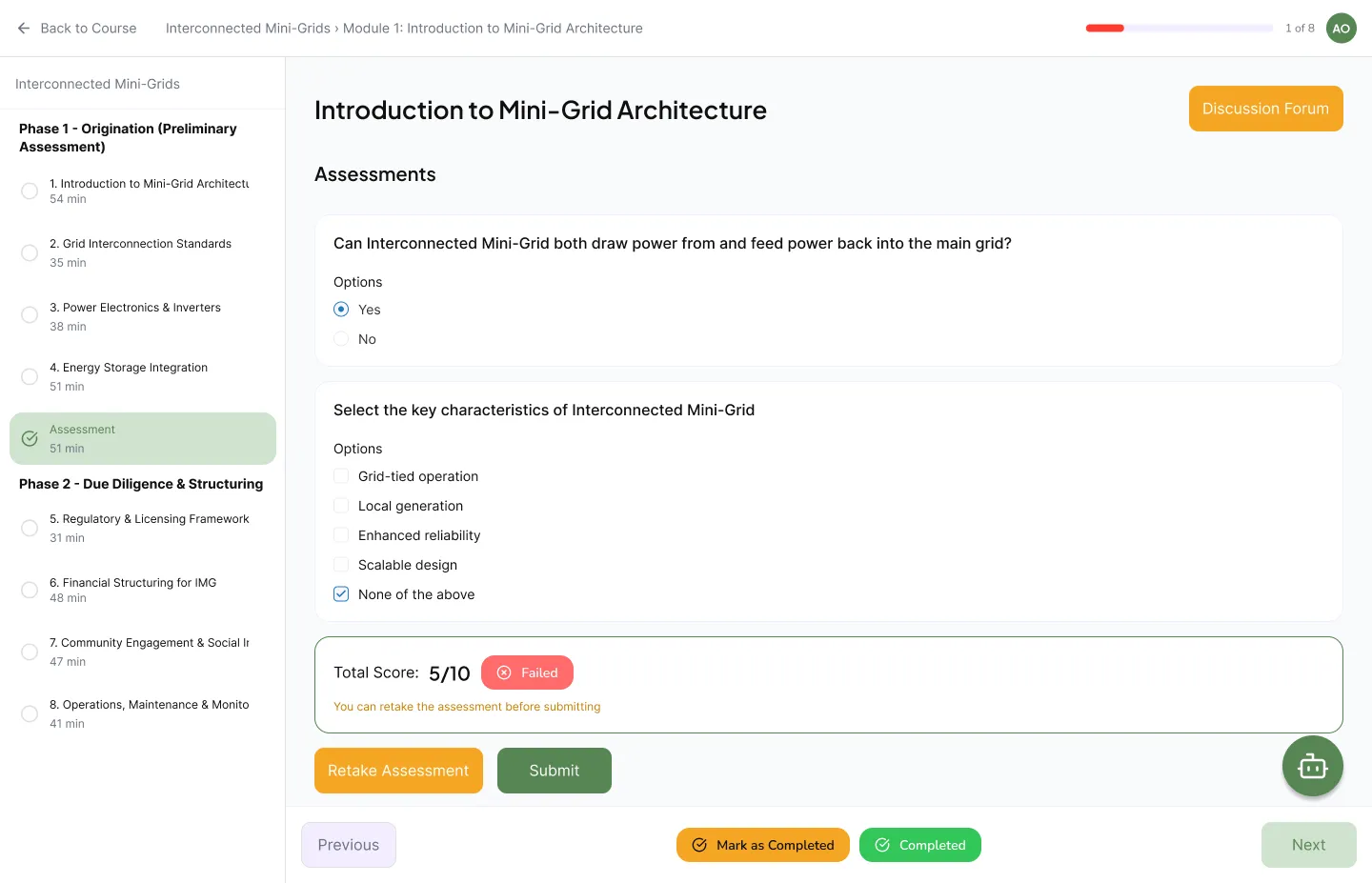
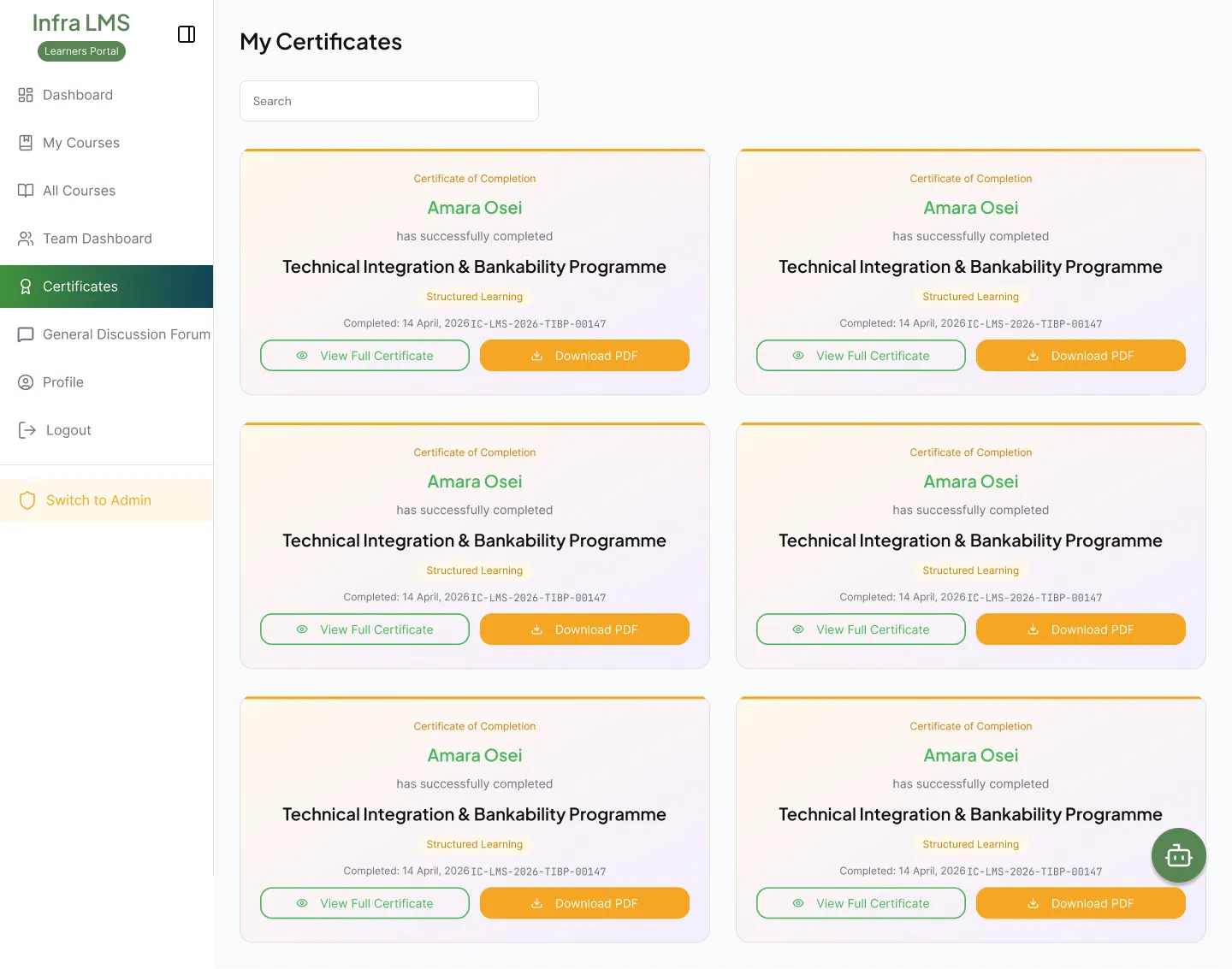
- Designed a phased course model: curricula split into stages (Origination, Due Diligence, …), each module carrying its own Content, Materials, SOPs, Glossary and FAQ tabs, an assessment, and a certificate on completion. Seven surfaces inside every module, so nothing sends the learner elsewhere.
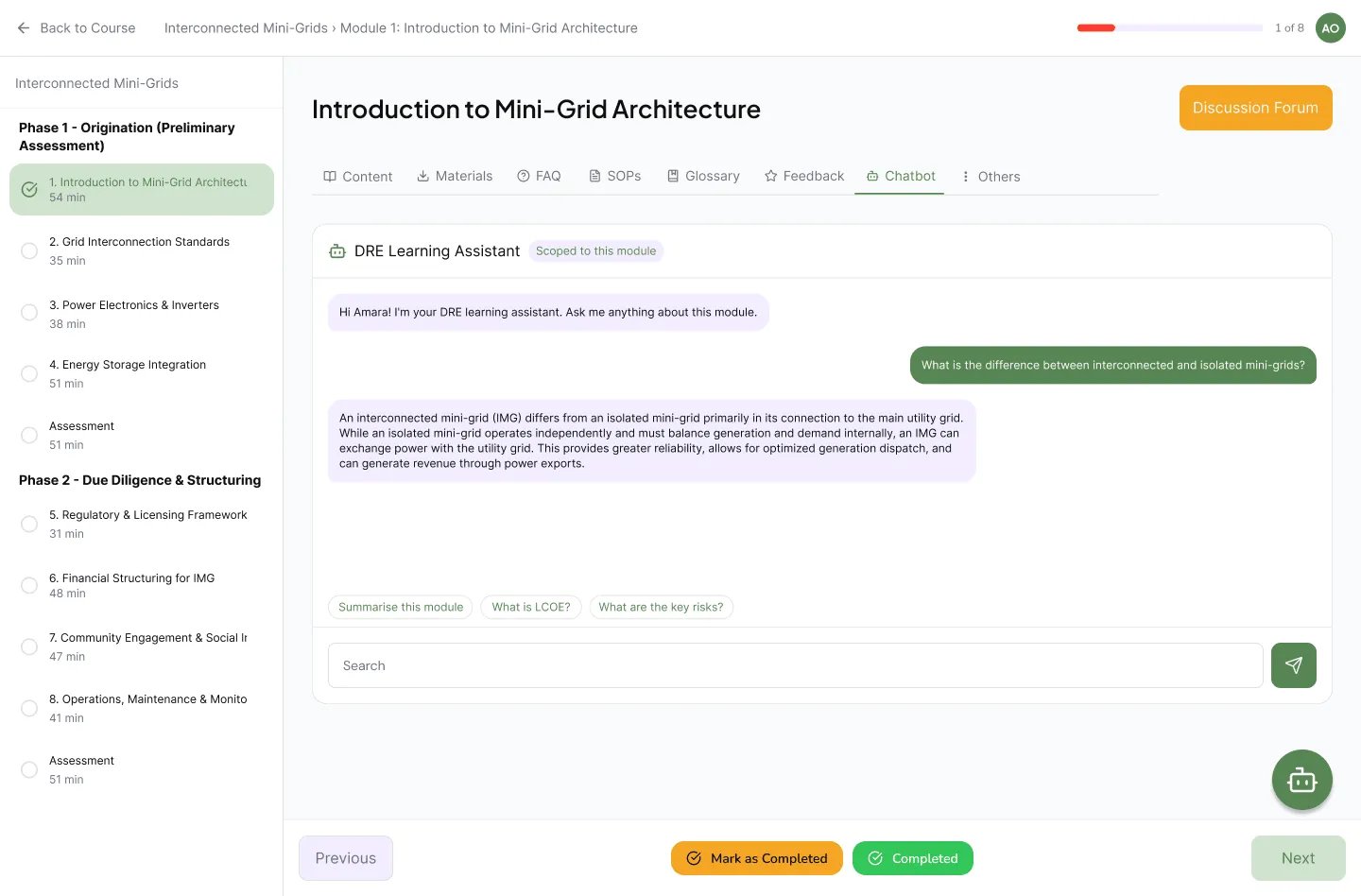
- Designed a module-scoped AI assistant: “ask anything about this module”, with suggested prompts (summarise, key risks, define a term) and a visible “scoped to this module” label, grounded in the module content, not the open internet.
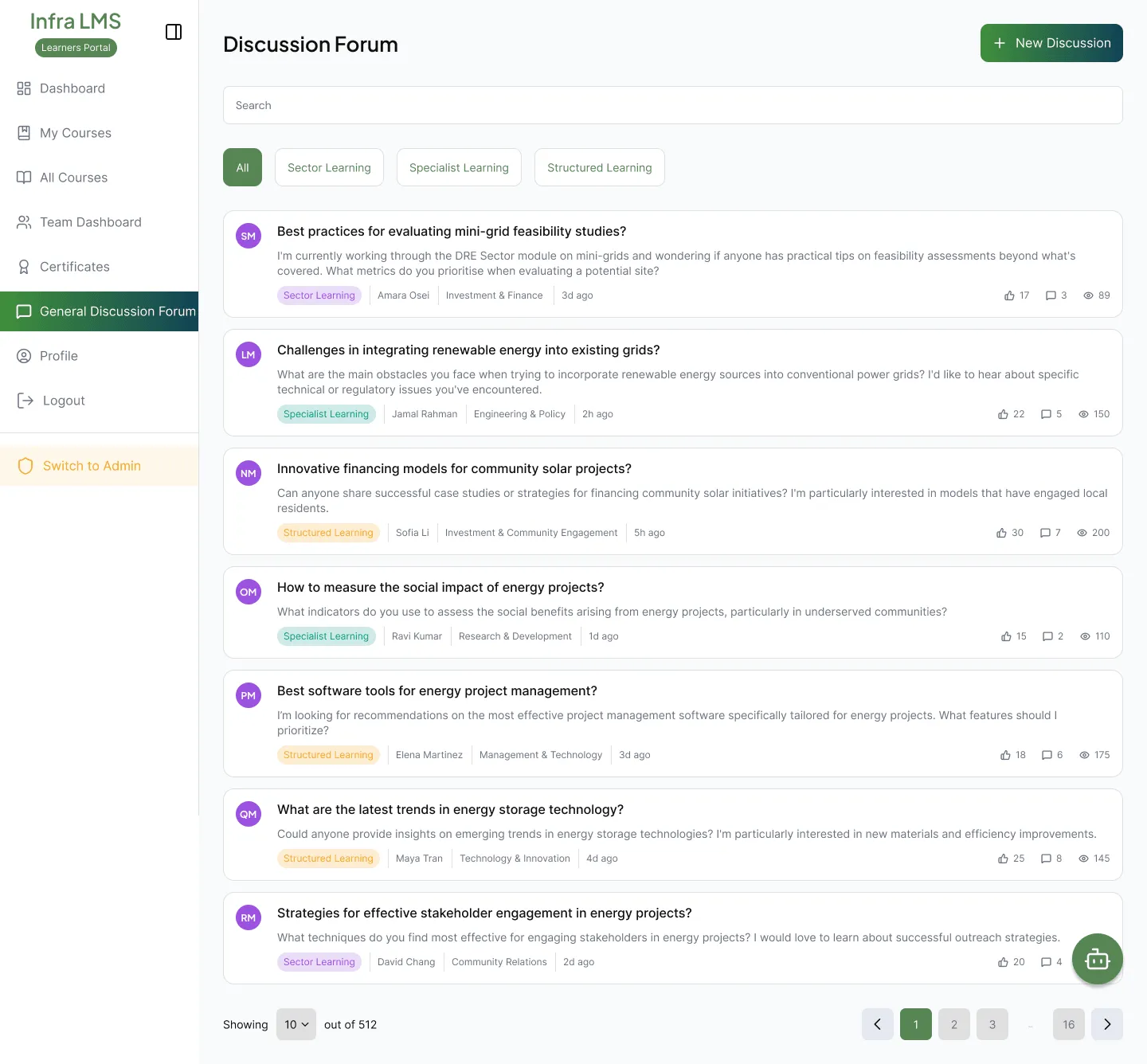
- Added a manager dashboard, a discussion forum, structured multi-dimension course reviews with reply threads, and course-owner reports.
Key decisions
Scope the AI to the module, and say so. A general chatbot invites off-topic questions and confident wrong answers about finance. Scoping it to the current module, and labelling that limit clearly, trades breadth for trust, which is the correct trade when the subject is credit structuring.
Bring reference material into the module. SOP and glossary tabs mean the learner never abandons the lesson to look something up.
Split learner and course-owner experiences behind a role switch, rather than one crowded view that serves neither.
Make feedback structured and answerable. Multi-dimension ratings plus reply threads give course owners something specific to act on.
Outcome
Every module now carries seven reference surfaces, content, materials, SOPs, glossary, FAQ, feedback and the assistant, so a learner never has to leave the lesson to find an answer. The AI assistant stays scoped to the module in front of the learner rather than the open web, and the platform shares one design system with the CRM.
Onboarding time, completion rates, assistant usage, and whether learners read the “scoped” limit as relief or restriction, are still early. I hold them as targets rather than confirmed results, with firm figures to follow once there is a stable stretch to report.