A Nigerian infrastructure-finance institution (via DREEF) · 2025
CRM 2.0: a deal-origination system for infrastructure finance
Rebuilt how deal teams at a Nigerian institution that guarantees local-currency infrastructure bonds move projects from first contact to financial close: one unified deal record, a staged pipeline, portfolio analytics, and a settings layer operations run themselves. I set design direction and own the design system across the CRM, the learning platform and the internal service desk.
- Role
- Lead Product Designer
- Platform
- Web application
- Timeline
- 2025 – present
- Team
- Product & engineering leads; 2 designers mentored
- Design strategy
- Design-system ownership (CRM + LMS + service desk)
- IA & flow design
- Design QA & mentoring
Client name withheld. Screens are anonymised and all data shown is fictional.
Context
This institution guarantees local-currency bonds that fund infrastructure across Nigeria: clean energy, transport, housing, healthcare, manufacturing. Moving a project from first conversation to financial close is a long, regulated, multi-stage process, and deal teams were running it out of spreadsheets and email threads. CRM 2.0 is the rebuild. I work on it through DREEF, embedded with the client’s product and engineering leads, and I mentor two designers on the wider internal suite.
The problem
- No shared view of the pipeline. Leadership couldn’t see the portfolio by sector, stage or project type without someone building a deck.
- Inconsistent records. Company and project data lived in a different shape on every team.
- Origination context was scattered. Deal team, activities, checklists, documents and discussion sat in nobody’s system of record, so the history of a decision was somebody’s inbox.
What I did
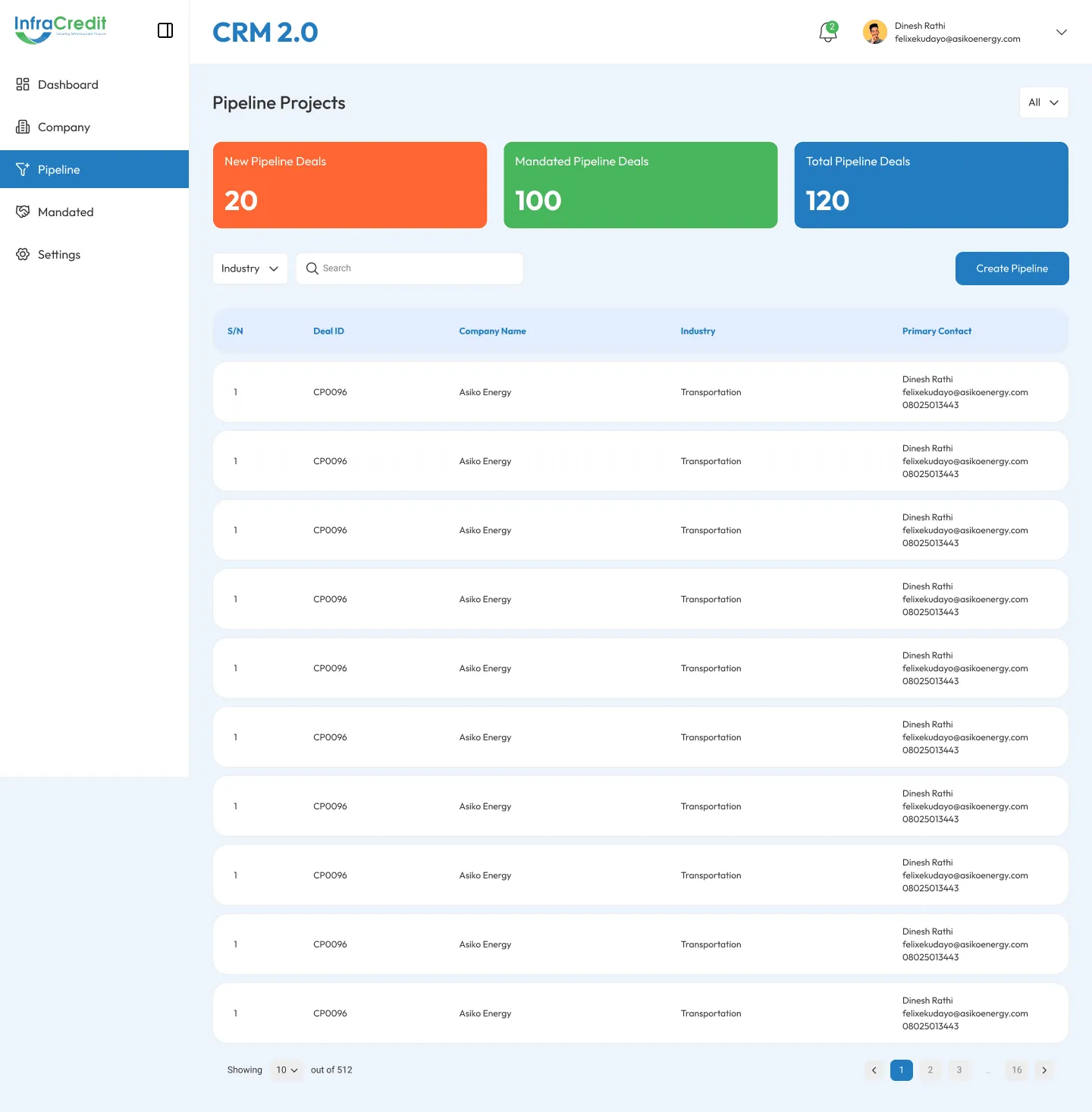
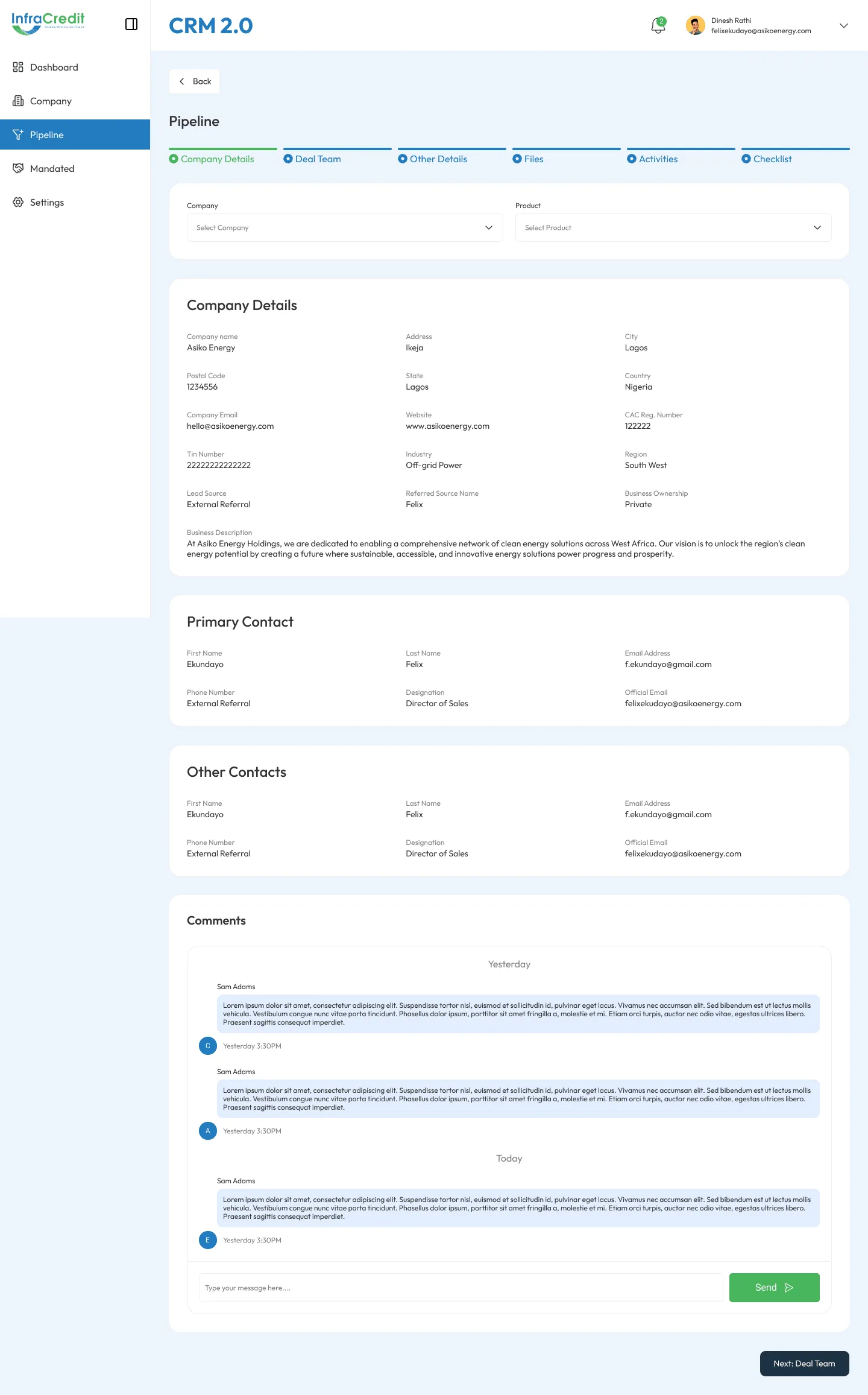
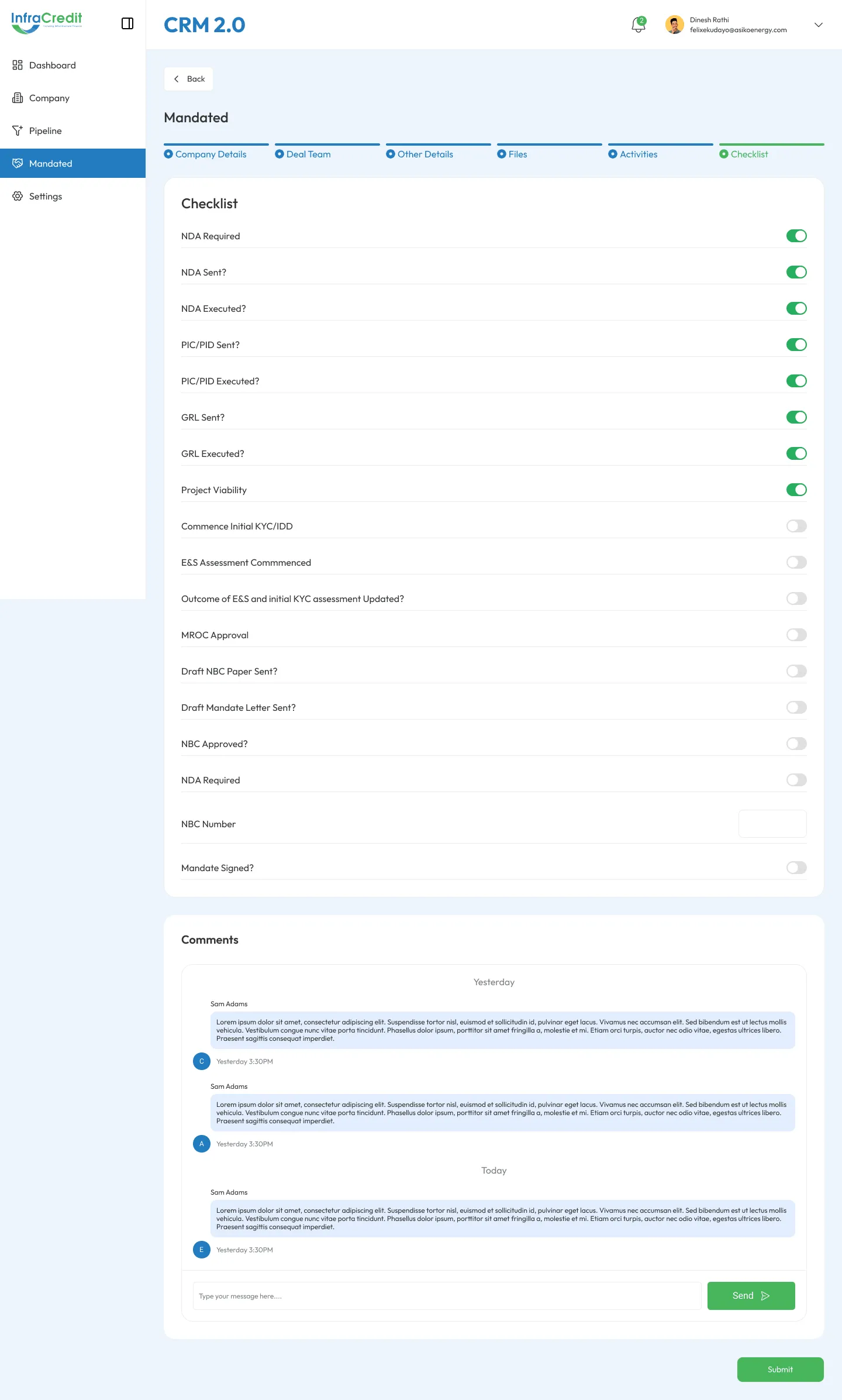
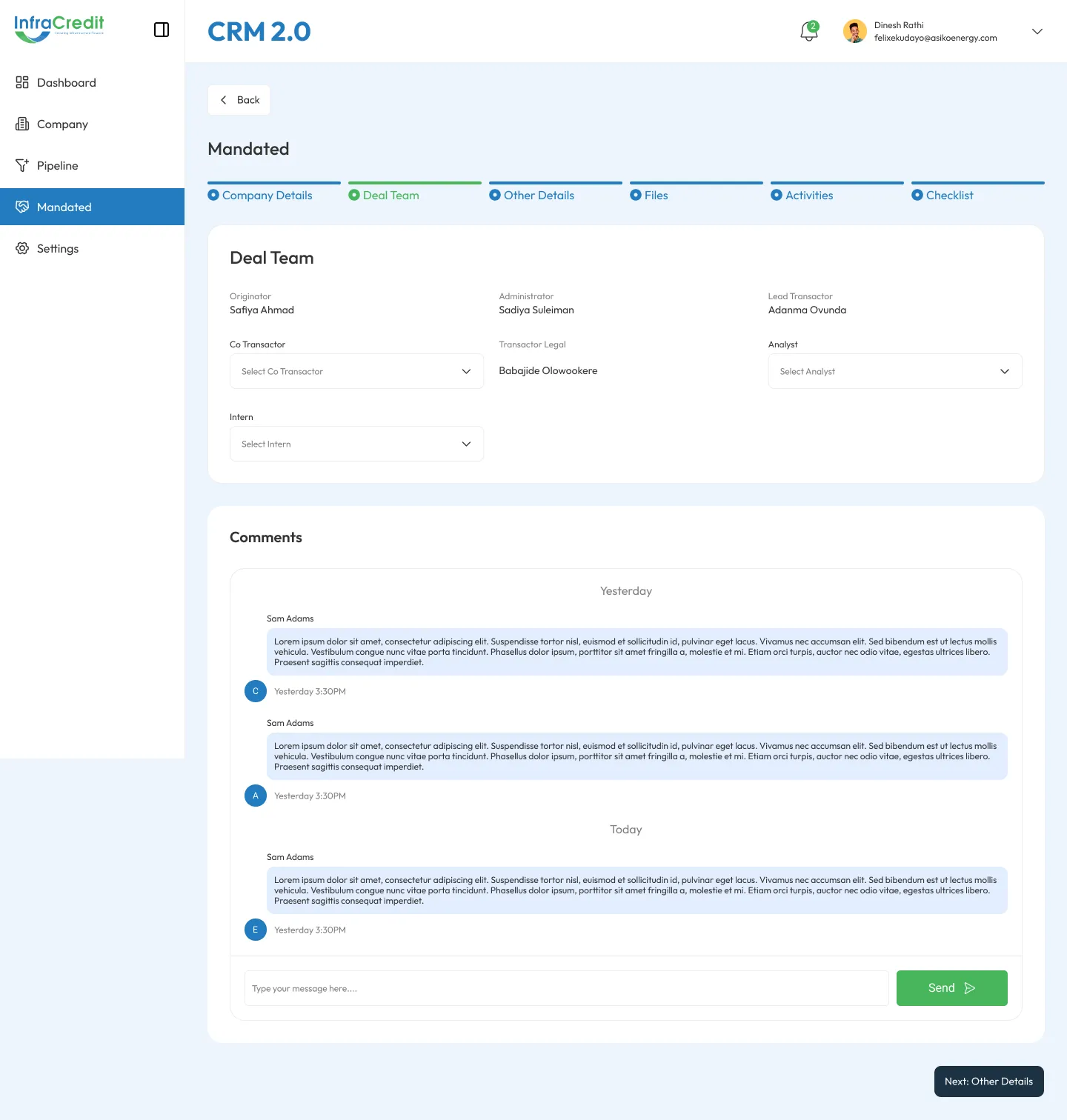
- Modelled the full deal lifecycle (Origination → Due Diligence & Structuring → Credit Approval & Financial Close) into one consistent record with the same tabs (Company Details, Deal Team, Other Details, Files, Activities, Checklist) whether a deal is in pipeline or mandated.
- Designed a guided creation flow that mirrors those stages, so every deal is captured the same way regardless of who opens it.
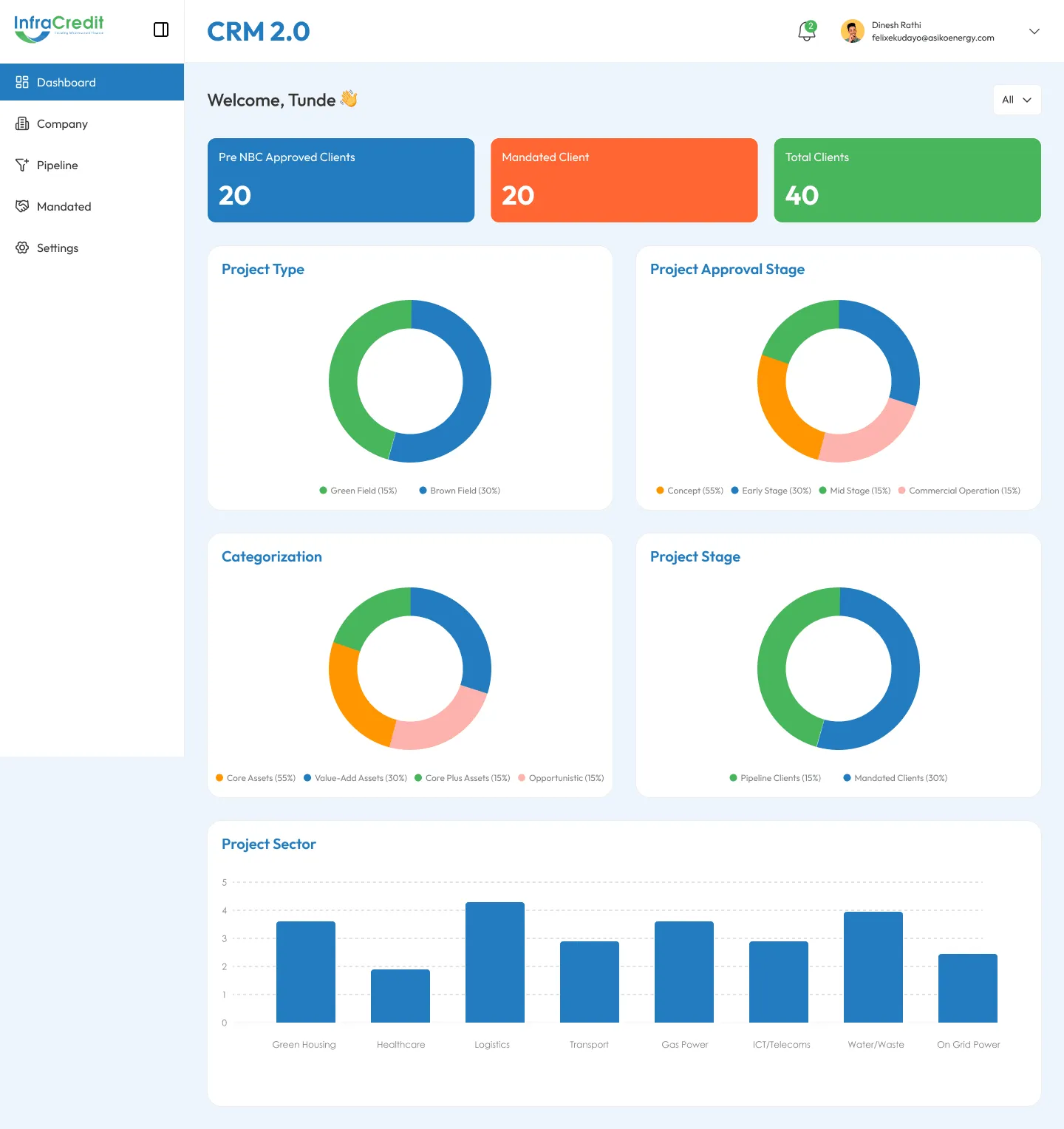
- Built the portfolio dashboard: distribution by project type, approval stage, categorisation, stage and sector. It is the deck leadership used to ask for, now live.
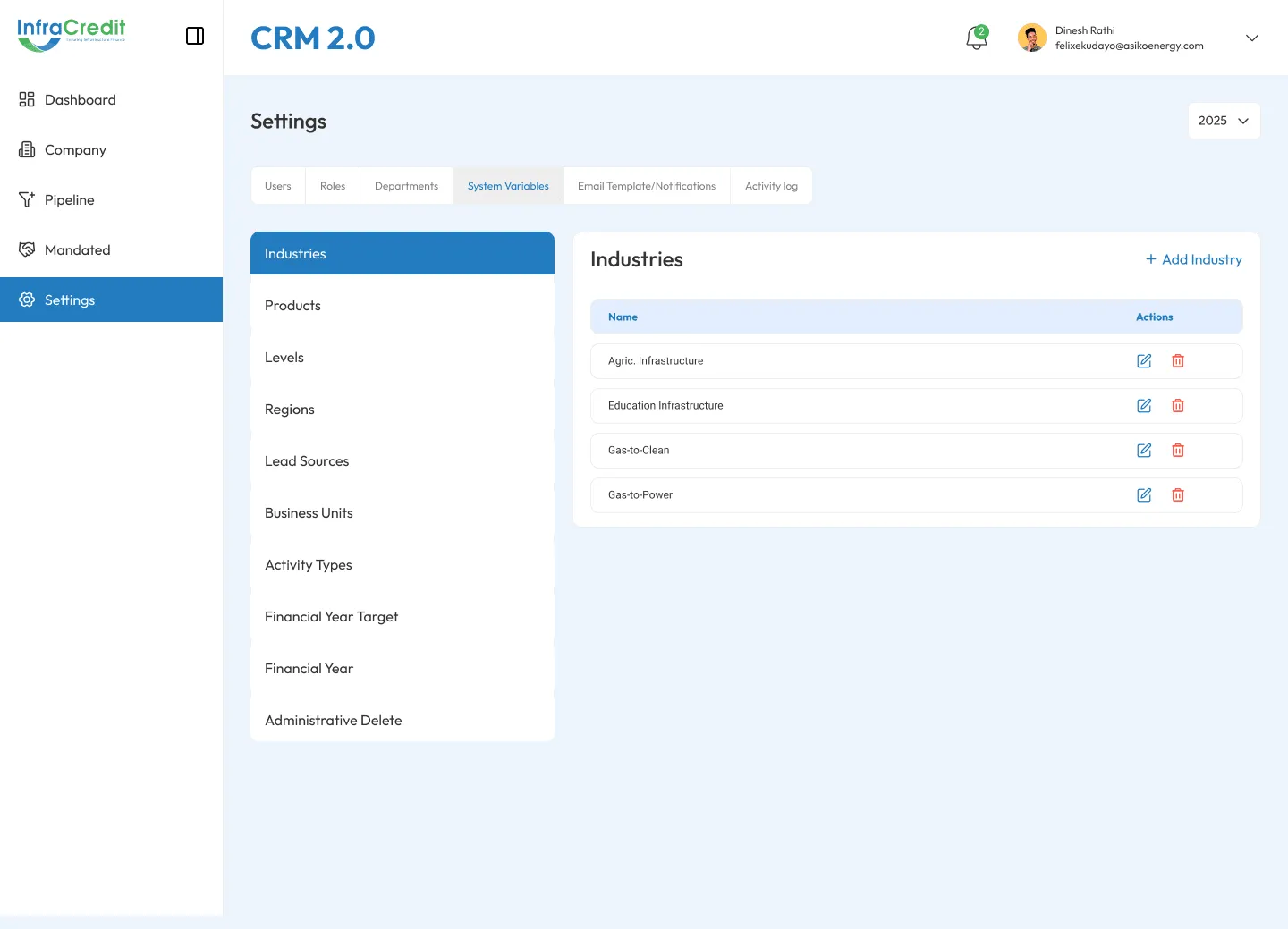
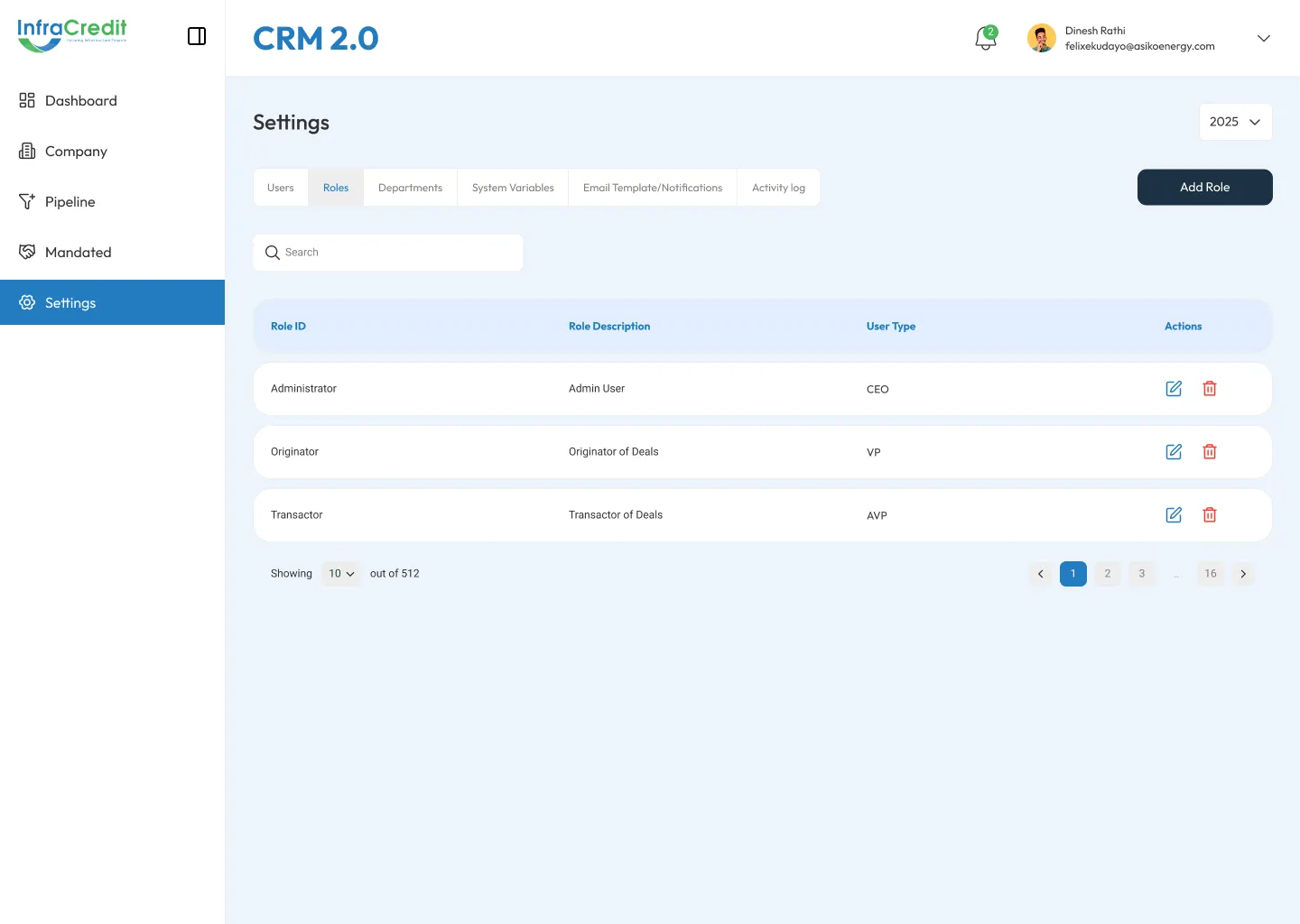
- Designed a deep settings layer (business units, departments, roles & permissions, industries, lead sources, financial-year targets, email templates, activity logs, system variables) so operations can change the taxonomy without an engineering ticket.
- Own the design system shared by the CRM, the learning platform and the internal service desk.
Key decisions
One deal record, not a screen per stage. A tabbed record keeps context in one place; the deal’s stage drives which checklist and activities apply, so the structure guides the work without boxing teams in.
Wizard to create, tabs to manage. Structured capture up front buys consistent data; free navigation afterwards keeps it usable day to day.
Move the deal-team conversation into the record. In-record comment threads replace the email chains that used to be the only trace of why a call was made.
Configuration over hard-coding. In a regulated institution the taxonomy shifts; the settings layer lets operations move with it safely.
Outcome
One system now models 5+ sectors of infrastructure deals on a single deal record that carries a project from first contact through financial close. The portfolio dashboard replaced the manual decks leadership used to ask for, and the settings layer lets operations adjust the taxonomy themselves, without an engineering ticket.
Adoption across deal teams, the change in origination cycle time, and how many deals now live in the system rather than a spreadsheet are still early. I hold them as targets rather than confirmed results, with firm figures to follow once there is a stable stretch to report.