AZIBA (Shipbubble) · 2024
AZIBA: a fashion marketplace from zero to launch
Sole designer on a multi-brand fashion marketplace for the Nigerian market: end to end across responsive web, iOS and Android, from information architecture to a shared design system to launch with 500+ products from 10+ independent sellers. Shoppable on the web and in the app.
- Role
- Sole product designer
- Platform
- iOS, Android, responsive web
- Timeline
- Mar 2024 – launch (ongoing)
- Team
- Founder / product lead, backend + mobile + web engineers
- End-to-end product design
- Cross-platform design system
- IA & user flows
- Prototyping & design QA

Context
Shipbubble is a logistics company. AZIBA is the consumer product it built on its delivery rails: a curated, multi-brand fashion marketplace for the Nigerian market. There was no product, no brand design language, and one designer. I owned the whole surface, a responsive web storefront and the buyer app on iOS and Android, plus the design system that keeps the three in step, from the first IA sketch to design QA at launch.
The problem, and the goal
Nigerian fashion commerce mostly happens on Instagram and WhatsApp. You find a look on a seller’s grid, DM for the price, pay into a bank account, and hope the parcel arrives. It works, but there is no consistent sizing, no returns, no single bag, and no way to trust a seller you have not bought from before.
AZIBA’s answer is curation plus fulfilment: a vetted set of independent brands in one catalogue, one checkout that can hold items from several of them, and Shipbubble handling delivery. Two goals pulled against each other and both had to be met. It had to feel like somewhere you browse for pleasure, and it had to behave like a marketplace that reliably gets a parcel to your door. All of it on web, iOS and Android, from one designer.
One system, three surfaces
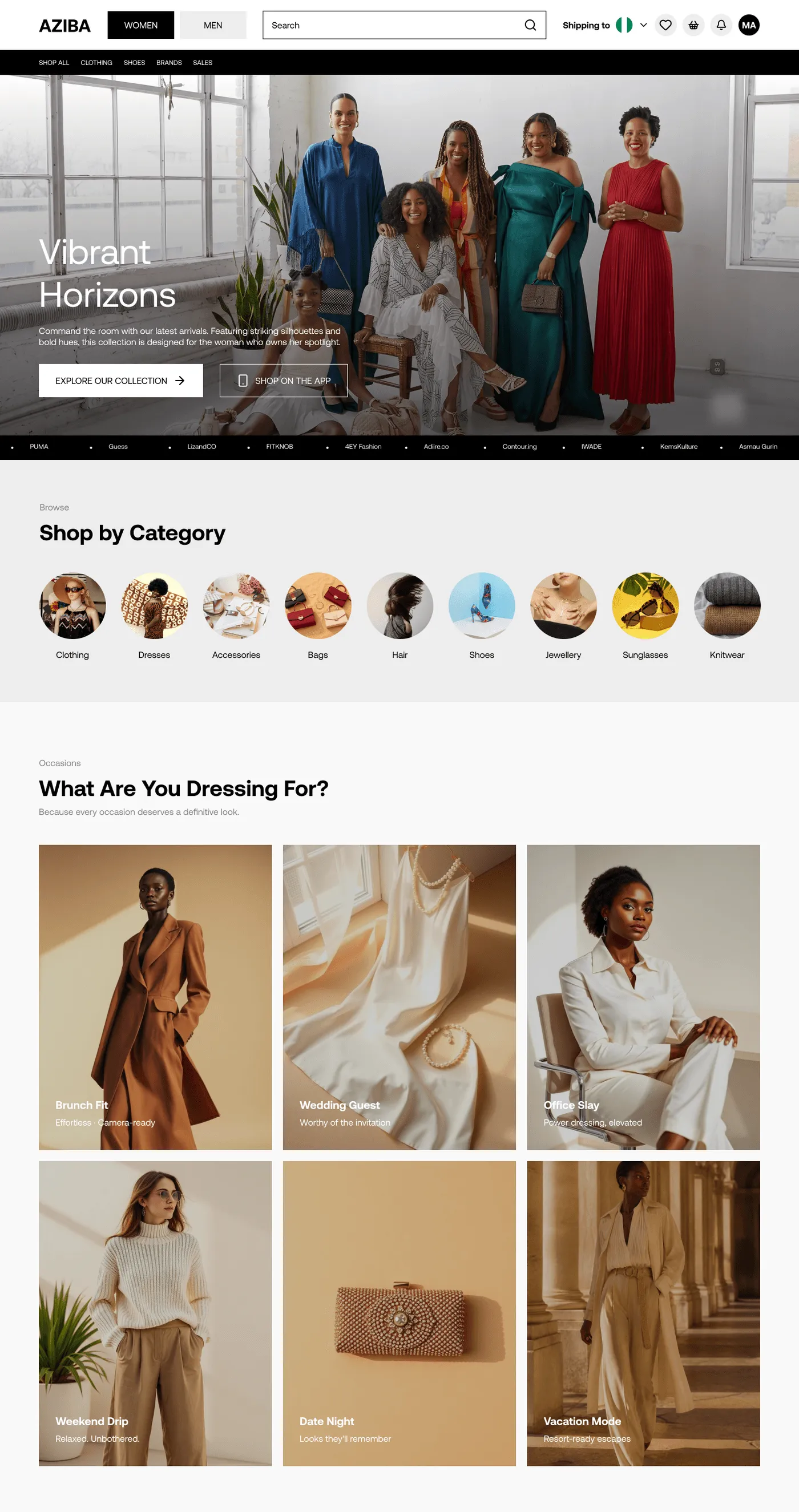
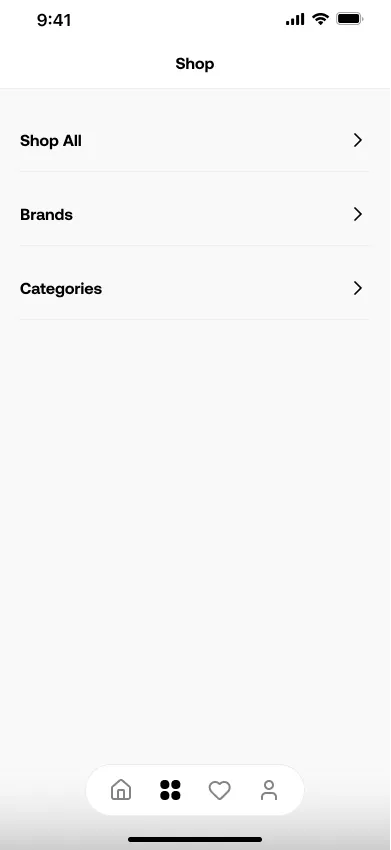
I drew the information architecture once, built one component library, and put a shared cart and account behind all three surfaces. Web and app are not a funnel and its goal, they are the same store with different shells. You can start a bag on a laptop and finish it on your phone, or the other way round. The app adds the native layer on top: push, an offline wishlist, saved payment methods.
The storefront is built to read like a magazine, not a search grid. Discovery is occasion-led, because that is how people here shop: “what do I wear to the owambe”. Shop-by-occasion sits on top of the plain catalogue, next to curated Edits and “The Aziba Journal”, so browsing always has somewhere to go that is not a filter.
Product and sizing
Returns are what kill fashion e-commerce, so the product page and the sizing system are built to prevent them, not just to process them.
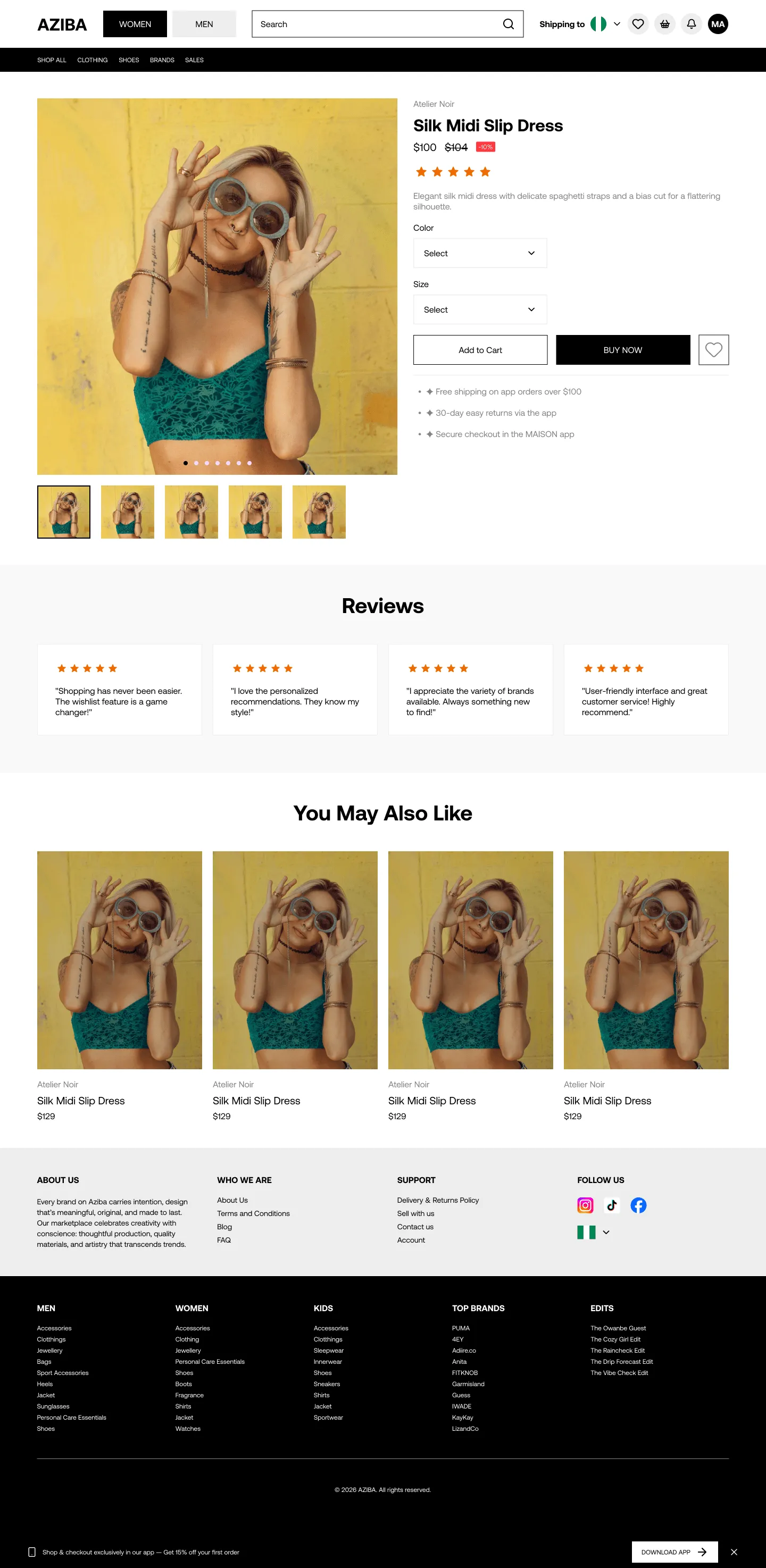
Every product page states the dispatch window and the returns window on the page itself, before the bag, not buried in a policy link. Add to Cart sits next to Buy Now, with the gallery, colour and size selectors, wishlist, ratings and a “You May Also Like” rail.
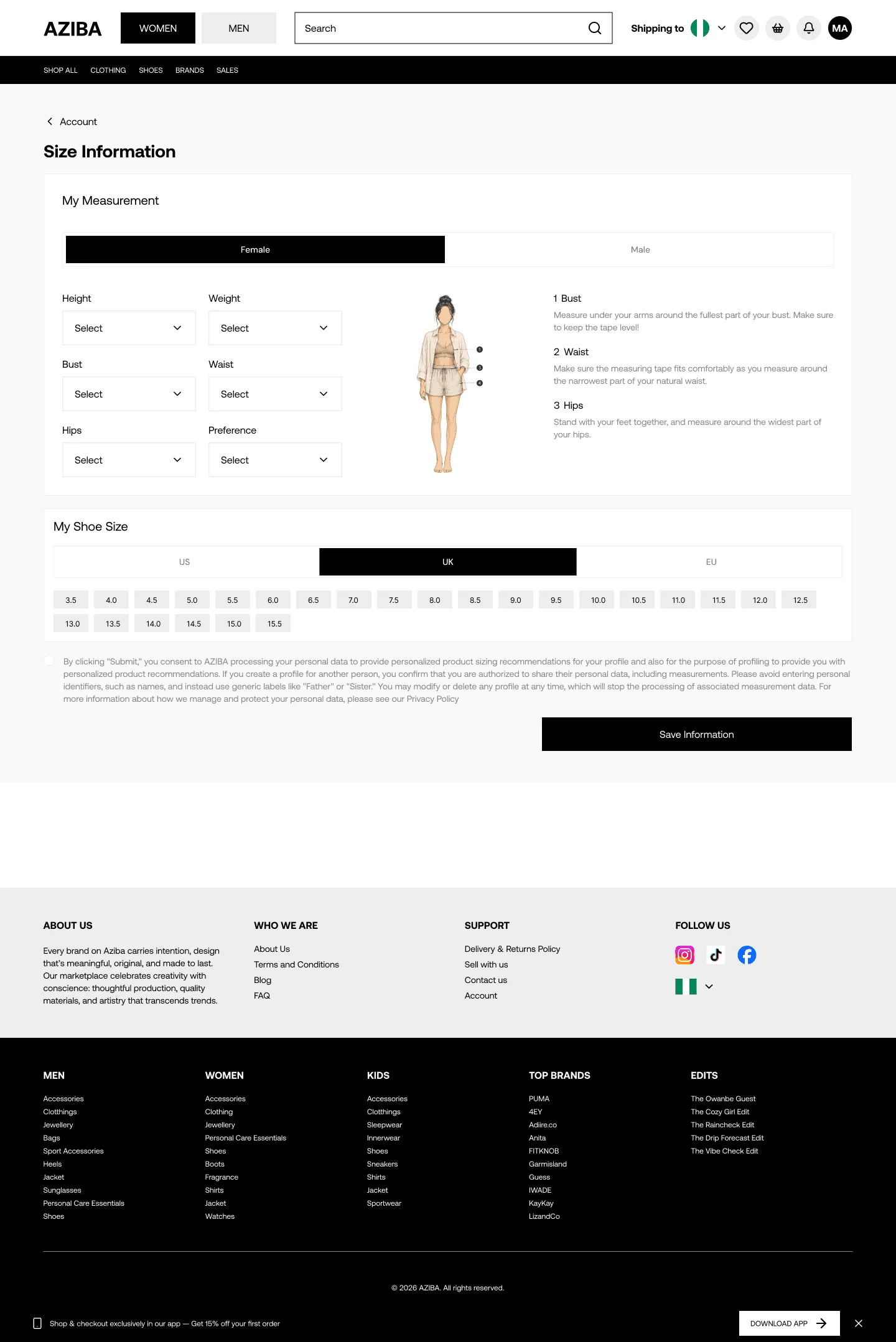
Behind size selection is a measurement profile: height, weight, bust, waist, hips, and shoe size in US, UK and EU, with an illustrated how-to-measure guide. It feeds a size recommendation per item. The consent notice asks you to label a profile you are filling in for someone else “Sister” or “Father” rather than using their name. Data minimisation written into the copy.

One bag across many brands
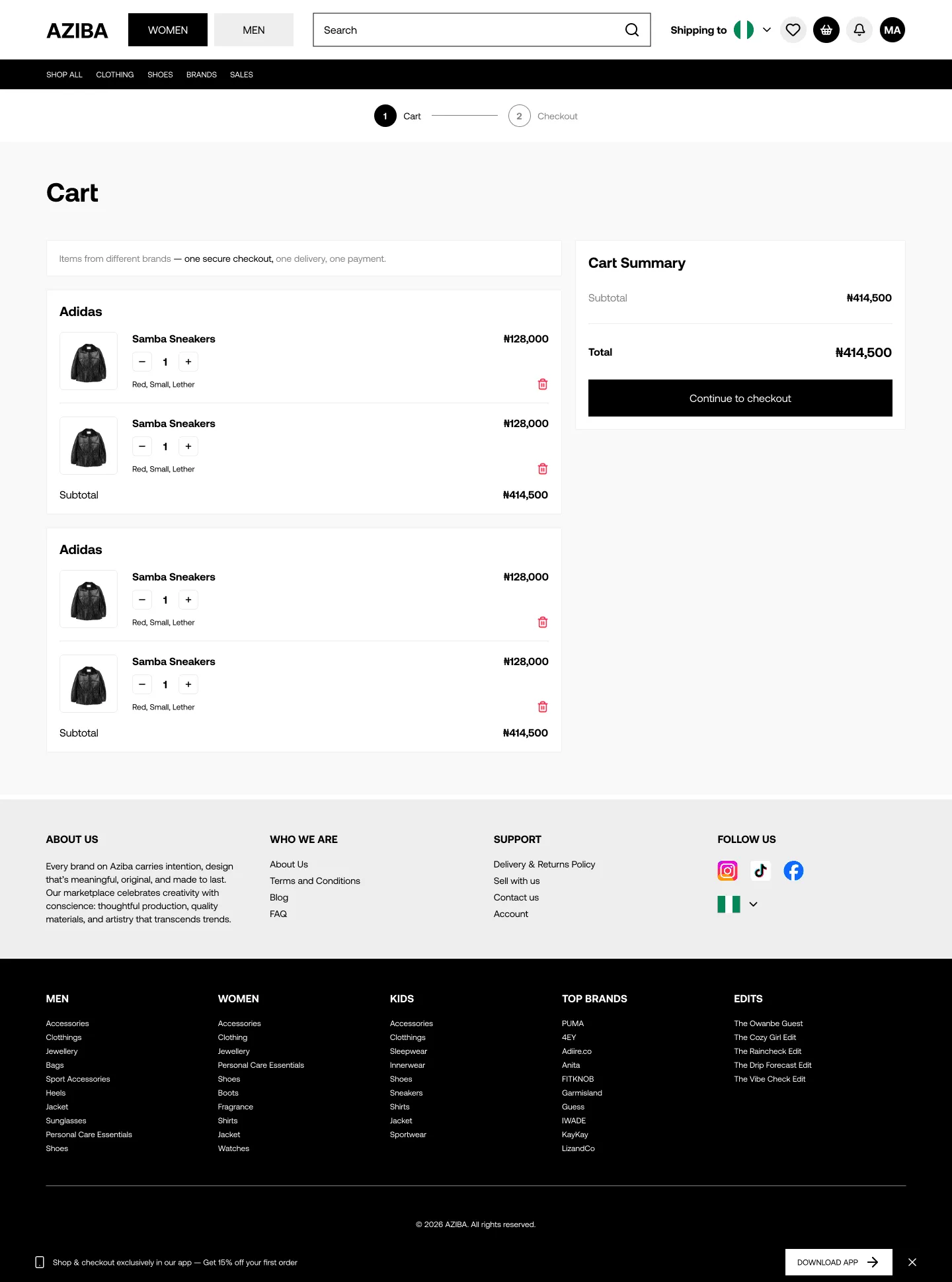
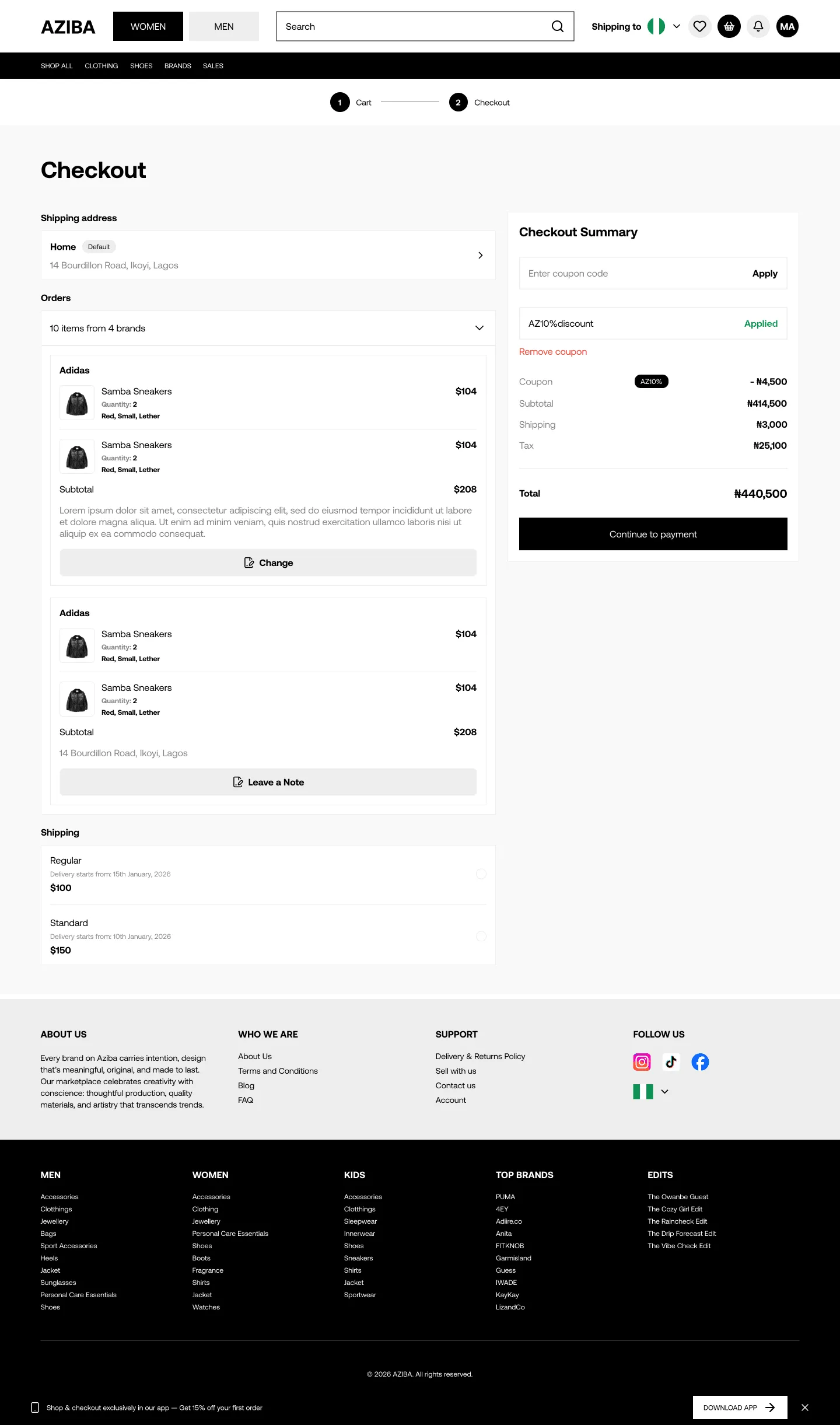
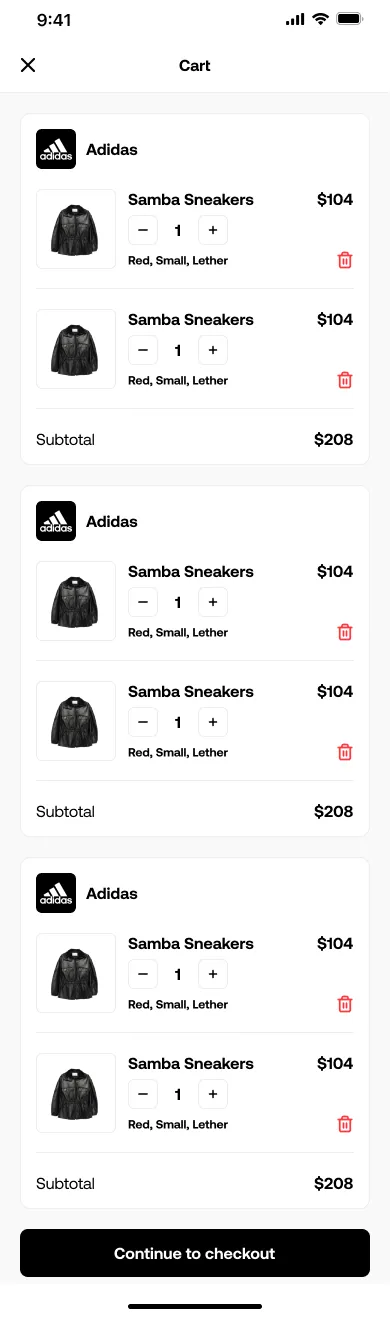
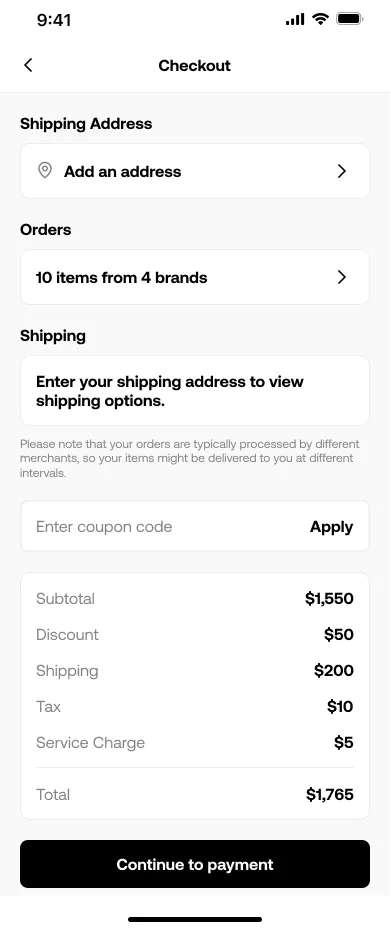
An AZIBA order can hold items from several independent brands at once. The bag groups by brand and shows a subtotal per brand, so a mixed order never looks like a bug, and each brand keeps its own “Leave a note”. Checkout then resolves the whole thing into one payment, one coupon and one delivery choice, with tax and shipping broken out before the total and each shipping speed showing the date delivery starts from.
“Pay for me” generates a shareable payment link, so a friend or family member can pay for your bag. In this market they often do.
Same store, two doors
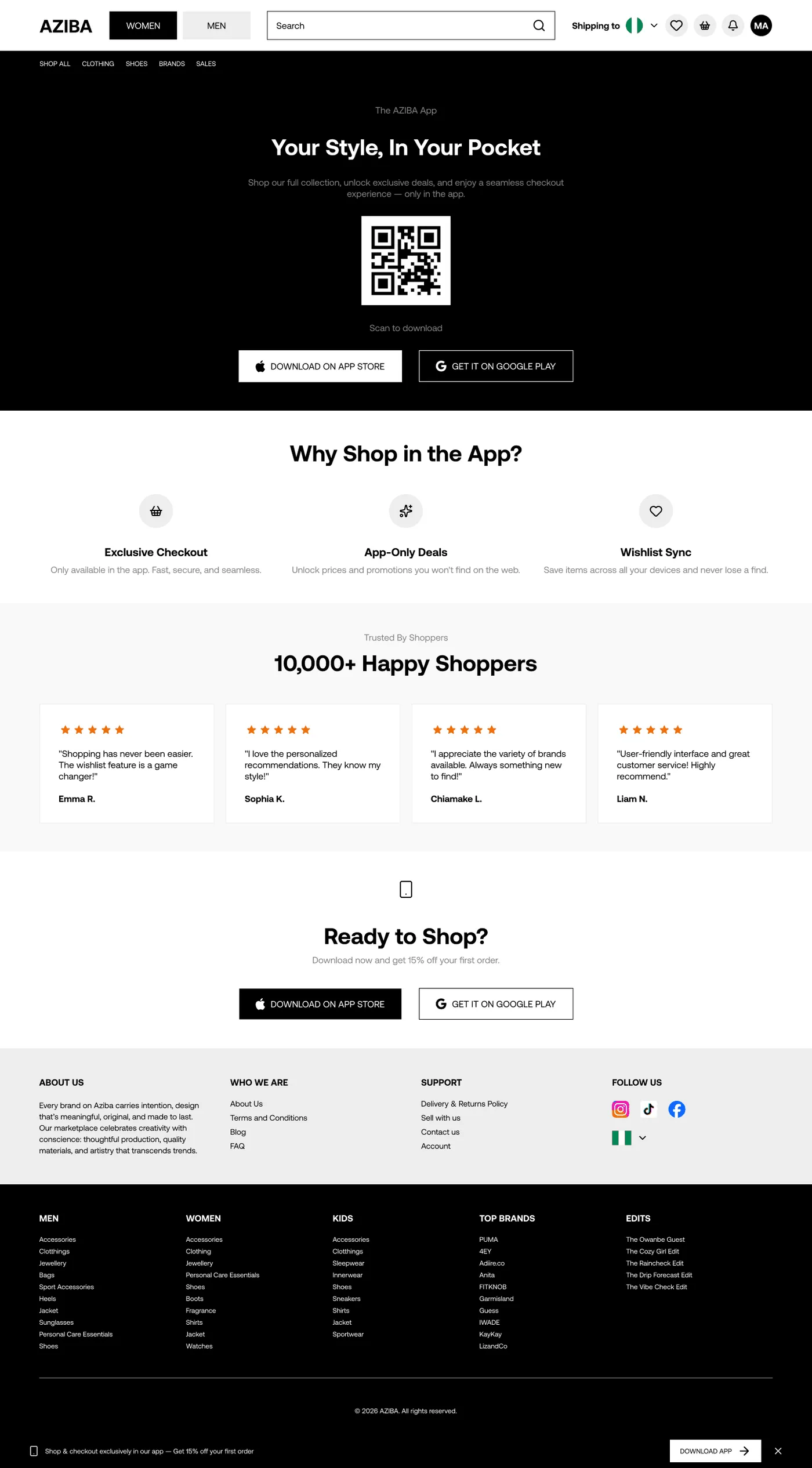
Because the cart and the account are shared, the app is not a separate destination to push people towards. The “Get the App” page says exactly that: the same catalogue and the same cart, plus the things a phone does better, push, wishlist sync and saved payment methods.
Outcome
AZIBA launched on the web and on the App Store and Google Play with 500+ products from 10+ independent sellers, all running on one design system across three platforms.
The design was built to move three numbers: checkout completion on a bag that can carry several brands at once, the return rate that the measurement profile exists to bring down, and repeat purchase, which is the real test of whether curation plus fulfilment beats buying through a DM. Those are still early, so I hold them as targets rather than results, with firm figures to follow once there is a stable stretch to report.